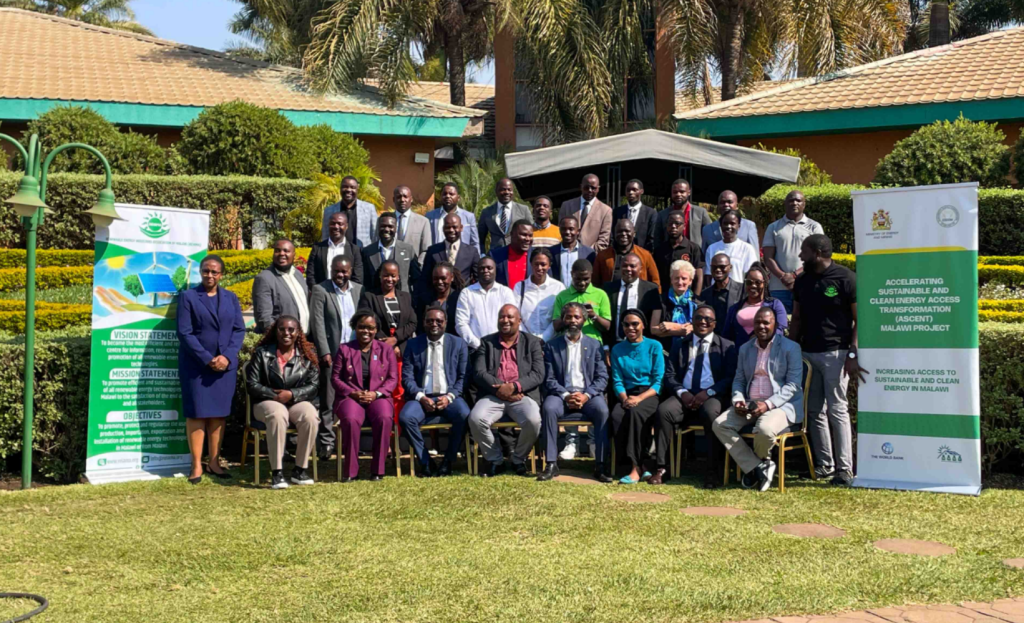
The Renewable Energy Industries Association of Malawi (REIAMA), in collaboration with the Ministry of Energy and the Global Off-Grid Lighting Association (GOGLA), convened stakeholders for the ASCENT Project Update Meeting to review progress, discuss implementation challenges, and strengthen collaboration in accelerating access to sustainable energy across Malawi.
The meeting brought together representatives from government, the private sector, development partners, and industry associations to assess the progress of the Accelerating Sustainable and Clean Energy Access Transformation (ASCENT) Malawi Project, a flagship initiative supporting the country’s ambition to achieve 50% electricity access by 2030.
Driving Energy Access Through Strategic Investment
Opening the meeting, stakeholders emphasized the importance of coordinated action in addressing Malawi’s energy access gap. With the country’s electrification rate having increased from 14.2% in 2021 to 25.9% in 2024, participants acknowledged the significant role previous initiatives have played while recognizing the need to sustain this momentum.
The ASCENT Project builds on these achievements by expanding both grid and off-grid electrification through five key components:
- Last-mile grid connections
- Off-grid solar home systems
- Electrification of schools and health facilities
- Clean cooking solutions
- Technical assistance and institutional capacity strengthening
Together, these components are designed to improve access to affordable, reliable, and sustainable energy while creating opportunities for private sector participation.
Significant Progress Across Project Components
Project Manager Austin Theu presented implementation updates, highlighting notable milestones already achieved.
To date, 3,566 households have been connected to the national grid, marking steady progress toward the project’s ambitious electrification targets. Under the off-grid solar component, eight companies have been shortlisted to deliver solar home systems, with financing processes progressing toward implementation.
Updates were also shared on the electrification of schools and health facilities, where technical assessments continue across both grid-connected and off-grid sites. The project is expected to install appropriately sized solar systems to improve energy access for essential public institutions throughout the country.
Expanding Opportunities Through Clean Cooking
The meeting also focused on the project’s clean cooking component, which aims to increase access to cleaner cooking technologies while supporting Malawi’s climate commitments.
Although strong interest was demonstrated through multiple business proposals, participants discussed the need to revise implementation approaches following challenges encountered during the initial onboarding process. A fresh call for proposals is expected, incorporating revised eligibility criteria and new carbon finance options designed to encourage wider participation from local companies.
Stakeholders noted that clean cooking presents significant opportunities for innovation, business growth, and carbon market participation while contributing to improved public health and environmental sustainability.
Strengthening Local Participation
A recurring theme throughout the discussions was the importance of ensuring meaningful participation by Malawian companies within the ASCENT programme.
REIAMA’s president, Brave Mhone, emphasized the organization’s commitment to assisting member companies with business development services, capacity building, and engagement with project fund managers to improve eligibility for future opportunities.
Stakeholders further highlighted the value of strengthening local technical expertise, expanding access to financing, and maintaining transparent stakeholder engagement throughout project implementation.
Collaboration Remains Key
Participants acknowledged that achieving Malawi’s energy access ambitions will require continued collaboration among government institutions, private sector actors, financiers, and development partners.
The meeting concluded with a shared commitment to periodic stakeholder engagements, allowing partners to monitor implementation progress, address emerging challenges, and identify new opportunities for collaboration.
As Malawi continues its journey toward universal energy access, the ASCENT Malawi Project remains a critical catalyst for expanding clean energy solutions, strengthening private sector participation, and improving livelihoods across the country.
Through sustained partnerships and coordinated action, stakeholders reaffirmed their commitment to powering a more sustainable, inclusive, and resilient energy future for Malawi.